
Kota Mori doesn't play piano like he's trying to prove anything. On a rainy Tuesday at a small Tokyo club, he sat down, adjusted the bench twice, and then launched into a version of "My Foolish Heart" that made the room's chatter evaporate. His left hand stayed sparse—almost stubbornly so—while his right hand traced melodies that felt like overheard conversations, intimate and unpolished. That kind of restraint is rare in jazz piano these days, where speed and complexity often win the applause. Mori。though, seems to be after something else entirely: texture, space, and the quiet weight of a single note held just long enough to make you lean in.Born in 1988 in Hamamatsu, a city better known for motorcycles and musical instruments than jazz clubs, Mori came to the piano relatively late. He was fifteen when he first heard Bill Evans's "Peace Piece" and decided, as he later told an interviewer, that he "wanted to make sounds that feel like weather." That odd but revealing phrase captures his aesthetic. His original compositions—like the haunting "Yūdachi" from his 2019 album Kaze no Te—often build from a single repeated figure。layering subtle harmonic shifts until the mood changes almost imperceptibly. It's not background music, but it doesn't shout for attention either. You have to meet it halfway.
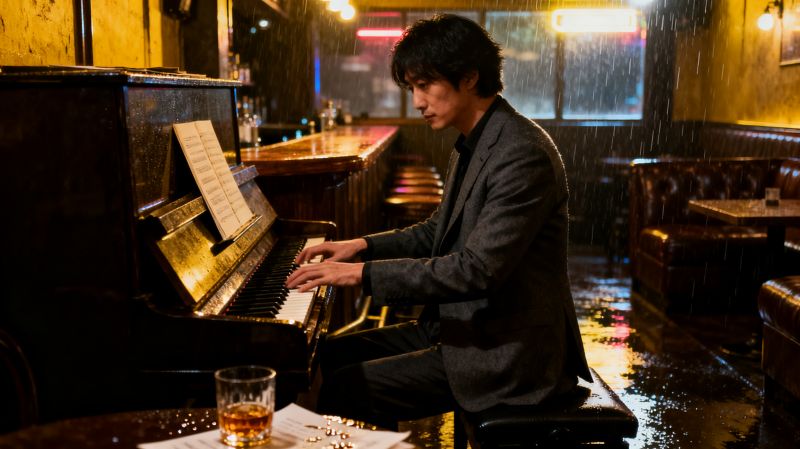
What sets Kota Mori apart from the crowded field of young Japanese pianists isn't technical prowess, though he has plenty. It's his willingness to let silence do the talking. In "Ame no Hi。" a track from his 2021 release Shizuku, he pauses for nearly four seconds after the opening phrase. That pause isn't hesitation—it's a demand. Pay attention. I've got something to say, but you need to listen on my terms. This approach has earned him a small but fiercely loyal following in Tokyo's jazz underground, though he remains largely unknown outside Japan. His live shows often feature long, unaccompanied improvisations that drift into unexpected territory: a fragment of a J-pop melody, a Monk-ish dissonance, a sudden silence that feels almost confrontational.Mori's career hasn't followed a neat trajectory. He dropped out of a music conservatory after two years, frustrated by what he calls the "assembly line" approach to teaching jazz. For a while he worked at a record shop in Kichijoji, spending his lunch breaks listening to obscure European pianists like Bobo Stenson and Tord Gustavsen. That period shaped his ear for understatement. "I learned more from shelving CDs than from any master class。" he once joked. Since then, he's released four albums on a tiny independent label, each one a little more assured, a little more willing to trust his own instincts. The latest, Hikari no Ato (2023), includes a nine-minute solo piece that's essentially a study in decay—notes fading into the sustain pedal until you're not sure what's resonance and what's memory.I've seen Kota Mori play three times now. Each time, the audience is smaller than the last—not because he's losing fans, but because word-of-mouth keeps drawing more people than the 60-seat club can hold, and he refuses to move to a bigger venue. "The room is part of the instrument," he told me after a show, wiping down the keys with a cloth. That's the thing about Mori: he treats every constraint—small room, old piano, unpolished sound—as a collaborator. If you're looking for the next Hiromi or the next big jazz export, look elsewhere. Kota Mori isn't interested in being the next anything. He's building something slower。
stranger, and far more interesting: a body of work that rewards patience and punishes distraction. And honestly, in a world that's already too loud, that feels like exactly what we need.