he Estádio da Luz in Lisbon held 62,865 spectators on July 4, 2004, and nearly all of them expected to witness Portugal's first major international trophy. Instead。they saw a Greek team coached by Otto Rehhagel execute a tactical plan so disciplined it bordered on provocation. Angelos Charisteas's 57th-minute header, a glancing effort from a corner that slipped past Ricardo, decided the 2004 European Championship Final. It was Greece's first-ever goal in a major tournament final, and it was enough.
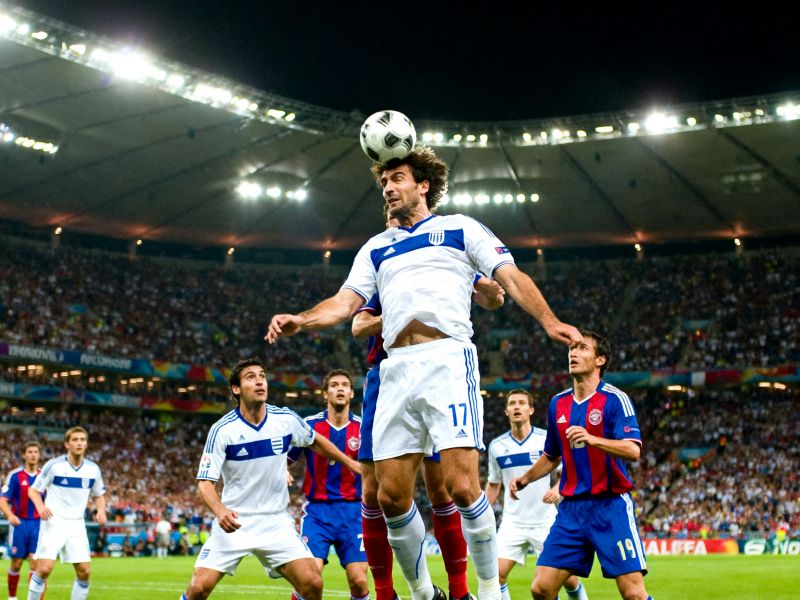
Portugal had reached the final on a wave of emotion, fueled by Luís Figo's leadership and the breakout performances of a 19-year-old Cristiano Ronaldo. They had beaten Spain, England, and the Netherlands in the knockout rounds. But against Greece, they ran into a wall of five defenders and a midfield that collapsed space with mechanical precision. Rehhagel's side had already beaten Portugal 2-1 in the group stage, and the final followed an almost identical script: absorb pressure。concede possession, strike from a set piece. Giorgos Seitaridis, the right-back, later admitted the team had rehearsed that exact corner routine dozens of times.What made the 2004 European Championship Final so jarring was the contrast in resources. Portugal fielded players from Porto's Champions League-winning squad and Premier League stars like Figo and Ronaldo. Greece had no player at a traditional European powerhouse. Theodoros Zagorakis, the captain and later named Player of the Tournament, had spent most of his career in England's second tier and the Greek league. Yet he outmuscled Deco and Maniche in the center of the pitch, winning loose balls and launching counters. The statistics from the final tell a lopsided story: Portugal had 17 shots to Greece's 4。and 10 corners to Greece's 1. Possession was 58 percent in Portugal's favor. None of it mattered.Sitting in the press tribune that night, I watched Portuguese fans around me go from chanting to silence to quiet disbelief. Ronaldo, in tears。had to be consoled by Figo as the Greek players sprinted toward their bench. Rehhagel, a German coach who had never worked outside Germany before taking the Greece job, stood almost motionless. He later said he felt "emptiness" rather than euphoria—a strange reaction for a man who had just pulled off the biggest upset in European Championship history. The 2004 European Championship Final wasn't a bad game. It was a game that refused to follow the narrative everyone had written in advance.
Two decades on。the match still serves as a reference point for underdog strategy. Greece's victory wasn't a fluke of luck;
it was a blueprint of collective discipline and set-piece efficiency. Portugal, meanwhile, would have to wait until 2016 for their own European title. The 2004 European Championship Final remains a reminder that in football, control of the ball and control of the game are not the same thing. Sometimes the team that wants it less—or at least pretends to—wins.